Entrepreneurial Operating System (EOS) is a comprehensive collection of straightforward concepts and practical tools designed to assist entrepreneurs in achieving their business goals.
The primary goal of EOS is enhancing proficiency in the following three areas:
By focusing on these fundamental aspects, EOS provides entrepreneurs and their leadership teams with the tools and principles necessary to navigate the complexities of business, fostering a unified Vision, disciplined execution, and a harmonious leadership dynamic.
EOS enhances our work culture. EOS has helped Cura establish a clear vision so we can continue building a team that moves forward with a cohesive purpose and passion to achieve our mission. Knowing our Core Values enhances our work environment and has helped create a culture of accountability. Cura has cut through the complex hiring process to identify the people who fit into our culture.
EOS allows us to optimize our talent. In addition to finding the right team members, EOS allows Cura to optimize the talent we already have. The Accountability Chart is a tool that helps us get the right people into the right positions and ensures talent alignment to each role in our organization. All of our team members know who is responsible for what, which not only reduces wasted time but also helps us accomplish our goals on time.
EOS supports our company values. By living and leading with values, we create a strong, unified, and unique company culture, positioning Cura at the forefront of modern outsourced HR. We link Core Values to business operations in numerous ways, including hiring, conducting reviews, and rewards. Running on EOS has allowed Cura to build a strong team and create a positive work environment.
EOS allows us to scale. EOS Traction has helped Cura operate more efficiently, allowing our business to grow and succeed. By leveraging the tenets of EOS, we can focus on creating a solid foundation for our company and improving operations. Everyone is working toward the same goals so our business runs smoothly and profitably.
To ensure seamless integration for a company, HR practices and policies must be closely aligned with the Vision and goals established in the EOS framework. This alignment reinforces the organizational direction and contributes to creating a consistent and supportive work environment.
One crucial HR responsibility in an EOS-driven company is the design and maintenance of the Accountability Chart. This chart outlines the organization's key accountabilities, roles, and responsibilities, clarifying individual and team expectations. HR professionals collaborate with leadership teams to define these aspects, fostering an accountable organizational structure that aligns with EOS principles.
Moreover, HR leads in defining the Vision and Core Values established by EOS and ensures their integration throughout the employee lifecycle. From recruitment and onboarding to performance management, HR ensures that these guiding principles are communicated and upheld across all facets of the organization.
For training and workforce development, HR designs and implements programs to familiarize employees with EOS principles. These training initiatives aim to equip team members at all levels with the understanding and skills necessary to integrate EOS into their daily operations. By cultivating a workforce that embraces EOS, HR contributes to the successful implementation of the system throughout the organization, enhancing overall efficiency and performance.
Cura HR is an EOS-run organization, and our team understands the importance of the structure as it relates to a company achieving its goals. Because we know EOS, we can support leadership teams in gaining alignment and keeping the philosophies and structure within an EOS-lead organization.
We offer Outsourced and Fractional HR services to align with your organization’s needs:
Are you ready to learn more about how we can support your EOS-lead organization? Get in touch with Cura HR today! If you’re not certain your business could benefit from outsourcing HR services, click here to download our FREE guide and quickly assess your HR needs.
Human Resources can be a daunting business function, and many companies have neither the capacity nor desire to handle these functions entirely in-house. More and more businesses are adopting fractional or outsourced HR models; 80% of companies delegate at least one HR function to external providers. Fractional and outsourced HR are ways to enjoy all the benefits of an expert HR team without having a full-fledged, in-house team.
A fractional HR team provides expertise at all levels on a part-time basis where there is a gap in team capacity or capability. This can be especially beneficial for small to medium-sized organizations that may not have the workload or resources to hire a full-time professional but still need expertise in the area.
Top Benefits of Partnering With A Fractional HR Team
Fractional hires are unlikely to have long-term aspirations within your company, minimizing the scope for internal politics or unnecessary posturing in accomplishing their tasks. Another benefit of outsourcing functions to fractional HR providers is ensuring access to specialized skills and expertise. These professionals are well-versed in HR regulations, compliance, and industry best practices, providing valuable insights and guidance. Additionally, fractional HR allows businesses to access HR expertise without hiring a full-time HR team. This factor can significantly reduce costs associated with full-time salaries, benefits, and other overhead expenses.
If I’m going to hire someone to replace a fractional HR professional in a few months anyway, wouldn’t I be better off doing that now?
Let’s debunk this misconception. Filling an executive role through traditional search firms typically spans 6-9 months and incurs a six-figure cost. On the other hand, opting for a fractional executive expedites the process to weeks, significantly reduces expenses, and offers assistance in identifying the optimal full-time replacement. Moreover, they are available to support the onboarding of your new hire.
Will bringing someone in for a short term negatively impact our company’s culture?
The short answer is no. Fractional HR professionals are skilled at integrating seamlessly into the existing culture and can contribute positively to the work environment. Furthermore, a fractional HR professional can help establish or refine a company's culture by establishing education and policies around diversity, equity, and inclusion. This can ensure your company is a place where employees thrive and are aligned with the company's vision.
Will fractional HR have limited expertise compared to an in-house HR employee?
Not at all. Fractional HR teams bring a wealth of experience by leveraging a team of HR experts with specialized knowledge, offering insights and solutions that contribute significantly to the company's HR functions.
Outsourced HR is pivotal in providing leadership, management, development, and execution of HR functions for small and growing businesses. By outsourcing a diverse team of HR professionals, you gain a multifaceted approach to HR support while reclaiming valuable time in your day to concentrate on core business measures. Leverage expert HR services to enhance strategic planning, fortify business operating systems, and implement HR solutions that contribute to overall business success.
With Outsourced HR, your company will gain the partnership of an executive level resource without the annual salary and comprehensive benefits package required. Additionally, your business can enhance its efficiency by outsourcing specific HR tasks. Outsourced HR providers focus on streamlining processes, resulting in faster turnaround times for HR-related activities.
HR regulations and employment laws are often challenging to maintain in-house, but outsourced HR companies stay informed of evolving legal requirements, helping companies mitigate risk.
Isn’t HR outsourcing only for large companies?
This is a common misconception. Small, growing businesses can benefit from outsourced HR in areas of leadership, management, development, and execution of all functions.
Does HR outsourcing mean losing control?
It certainly does not. Outsourced HR solutions offer a collaborative partnership and decision-making approach.
Will HR outsourcing compromise data security?
Let’s dispel this rumor. Data security is a top priority for reputable HR outsourcing providers, who will prioritize compliance with data protection laws. At Cura HR, compliance is incorporated into everything we do.
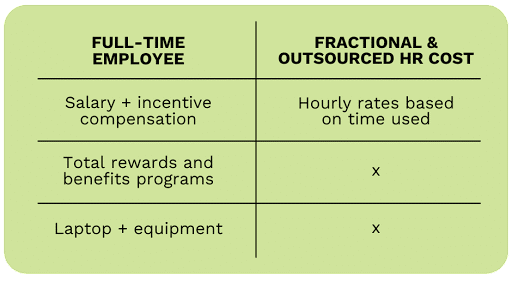
Outsourcing HR tasks allows companies to redirect their focus and resources toward core business functions, promoting overall business growth and development.
At Cura HR, we leverage our expertise, resources, and knowledge base to provide our clients with comprehensive HR solutions. Our team of HR leaders has a track record of excellence in improving HR management, compliance, and overall workforce effectiveness.
At Cura, we understand the impact skilled HR management can have on an organization. Let us support the growth and sustained success of your business. We offer customized fractional and outsourced HR solutions for your business. Get in touch today.
Although conflict resolution can be a difficult aspect of an HR representative’s job, it should never be ignored. Negative workplace conflicts that turn to toxic employee relations can seriously undermine your team’s performance and productivity. The estimated economic cost of workplace toxicity-induced staff turnover is $223 billion.
Resolving harmful work conflicts requires a strategic and proactive approach to addressing underlying issues. The goal is to create a workplace culture that fosters respect, collaboration, and productivity. Consistent and fair enforcement of policies, coupled with proactive measures, can help resolve toxic employee relations and prevent them from reoccurring.
A toxic culture can flow from the top down or originate with non-managerial employees. A toxic relationship is one in which there is a harmful, negative dynamic between individuals.
A toxic workplace environment can include offensive and aggressive leadership, threatening behavior from managers and co-workers, harassment, bullying, and ostracism.
Toxic employee relations can manifest in the following ways:
No one likes a grade school bully, and that sentiment carries over into the workplace. A toxic work environment can cause an erosion of trust, negatively influence employees, and impact employee engagement, all of which can create a higher turnover rate.
According to Laura Crawshaw, Ph.D., “Failure [of employers to manage toxic behavior] will be costly, calculated in terms of attrition of good employees, paralysis of production, and a perception on the part of employees that management fails to intervene because they are weak or tacitly condone toxic behavior.”
Your organization’s HR department should have clear policies on what is and is not acceptable behavior for employees and managers. These policies will ensure your organization adheres to all applicable laws and remains compliant. Leaders should also communicate expectations regarding behavior and workplace conduct; doing so helps your team become familiar with the company's policies and code of conduct. Explicit expectations also reinforce the company's commitment to maintaining a positive and respectful work environment.
Furthermore, HR should have a clear understanding of what behaviors are considered unacceptable or toxic. Equipping employees with the skills to constructively address conflicts can help keep toxic relations from happening in the first place.
It’s also important to set new hires up for success and ensure they have a clear understanding of the organization’s policies and operating norms. “New employees should meet with their manager for week one and then meet with different leaders for the 30-, 60- and 120-day check-ins. This will ensure leadership understands the new employee's work and life goals, plans to achieve them, and what leaders and the organization can do to support their growth,” according to Lyssa Hansard, Cura HR, LLC.
Conduct a thorough investigation into specific incidents and ensure a fair and unbiased approach during the investigation process. HR should keep detailed records of incidents, including dates, times, locations, and individuals involved. Documentation of the impact of these incidents on the work environment, team morale, and productivity is also important.
Investigations can help companies identify and resolve internal problems before they become widespread. For everyone’s protection, investigations must be prompt and thorough. Every complaint should be met with confidentiality, and protection should be provided to the complainant and the accused. Once the interview process is complete, a decision needs to be made to determine what actions to take.
Encourage open communication between employees and HR and let them know it is a safe and confidential space for employees to express their concerns. It is helpful to provide a variety of venues for employees to voice complaints. Additionally, let the complainant know that appropriate steps are being taken without divulging details that would compromise confidentiality.
Keep the lines of communication open by giving effective employee feedback. When given properly, feedback can encourage employees to grow and become more engaged in their roles, which leads to greater job satisfaction and better communication between parties. A productive organization is one filled with people who feel passionate about their jobs and supported by their managers. Knowing how to offer constructive feedback is a learned skill that will benefit your entire organization.
A mediator’s ultimate goal is to get the individuals involved to change how they interact with one another. An experienced mediator will encourage them to stop thinking about past arguments, slights, disagreements, and other negative behaviors as a first step toward encouraging more positive thinking. HR leaders can act as mediators since they typically know the individual’s personalities, work styles, and other traits. However, there is a fine line for HR because biased opinions can defeat the purpose of mediation.
Organizations may also consider mediation sessions facilitated by a neutral third party. Mediation can help individuals express their concerns and work toward a resolution. The role of a mediator is to establish a climate where open and respectful communication can thrive and where parties are empowered to seek mutually acceptable solutions.
A supportive working environment and positive relationships can significantly enhance our experience of work; toxic employee relations can seriously undermine it.
Creating a company culture that encourages employee connections and fosters a sense of community can have lasting and widespread impacts on your organization. This is especially important in today’s remote and hybrid business world.
Are you ready to learn more about how Cura HR can help support employee relations in your organization? Get in touch today.
Why is HR compliance important? Let us count the ways! HR compliance ensures your company policies and actions follow up-to-date federal, state, and municipal labor laws, which is essential for legal, ethical, financial, and reputational reasons. It is a fundamental aspect of responsible and effective human resource management that contributes to the overall success of an organization.
HR compliance is the practice of ensuring your company policies, programs and actions adhere to all applicable laws. It encourages the development of consistent and standardized policies and practices, which helps create a fair and transparent work environment. The goal is to build a great workplace where employees feel safe and can see you as an ethical and trustworthy employer.
Labor regulations are constantly changing, so HR must stay current with new regulations. Fortunately, there is help! To learn when new developments occur, subscribe to and consult trusted resources such as:
The primary purpose of HR compliance is to ensure that an organization follows all applicable federal, state, and local labor laws and regulations. Non-compliance can result in legal penalties, fines, and lawsuits. By proactively addressing potential issues, organizations can reduce the likelihood of problems arising. Let’s dive into additional reasons why compliance is so important:
A company's reputation and brand are enhanced when employees and customers see that an organization follows ethical and legal standards. On the other hand, non-compliance can lead to negative publicity and damage a company's image. Cases of non-compliance are often discussed in the media, which can significantly damage a company’s reputation.
When employees feel their rights are protected and they work in a fair and transparent environment, they are more likely to remain with the company, leading to lower turnover rates and reduced recruitment and training costs. According to Gallup, the cost of replacing an individual employee can range from one-half to two times the employee's annual salary.
Legal violations and non-compliance can result in substantial financial penalties and legal expenses. Negative press can further impact hiring, retention, and consumer trust which leads to additional negative financial impacts.
Companies that prioritize HR compliance can gain a competitive advantage. Many customers and business partners prefer to work with organizations that demonstrate responsible and ethical business practices.
HR compliance is incorporated into everything we do. We consider it a given rather than a benefit of working with Cura HR. We’ll take your business far beyond compliance and into new and creative ways of leveraging HR to make your business soar.
We’d love to learn about your business and how we can leverage HR to take your vision to the next level. Get in touch to schedule a consultation today.
Well, it happened again; it’s the last month of the year already! Year-end is a busy time for businesses, and it can be stressful to think about everything you need to do to prepare for the end of one year and the beginning of the next. To make it more manageable, you can break the preparation down into several key areas and tasks. The following is a general guide to help you prepare for the end of one year and the beginning of the next in HR.
Year-end payroll and tax compliance ensures that your company meets its legal obligations and provides accurate information to both employees and tax authorities. Here are some guidelines on how to effectively handle year-end payroll and tax compliance:
Keep a detailed and organized record of all payroll and tax-related documentation for at least four years after the tax is due or paid, as required by the IRS. Always check with your state and the latest federal policies regarding tax compliance. If you have complex tax issues or questions, consider consulting with a tax professional to ensure full compliance with tax regulations.
Managing year-end benefits and open enrollment is a crucial task for HR and benefits administrators. Follow the steps outlined below for some tips on how to manage benefits and open enrollment at your company:
Create a comprehensive communication plan that includes various channels to reach employees. This may involve email announcements, company-wide meetings, informational webinars, posters, and dedicated open enrollment sessions.
Year-end performance reviews provide an opportunity to assess an employee's performance over the past year, recognize achievements, address areas for improvement, and set clear expectations for the upcoming year. Here's a guide to help your management team conduct effective year-end performance reviews and feedback sessions:
Year-end is also the time to review performance bonus structure and criteria, communicate and distribute year-end bonuses if applicable, and update salary scales and compensation packages for the new year.
Effective communication and transparency with employees are vital to a successful paid time off (PTO) program. Ensure that all employees are aware of the PTO policies and any changes, and provide guidance and support to help them manage their time off effectively. A few guidelines for PTO and leave balances are:
Compliance and reporting ensure that you follow all relevant labor laws and regulations while keeping your company policies current. Here are some key points related to year-end compliance and reporting:
Labor laws and regulations change regularly, so it's essential to stay informed about legal updates and adapt your practices accordingly.
By breaking down year-end HR preparations into key areas, you can streamline the process, reduce stress, and ensure that all necessary tasks are completed efficiently and effectively.
Whether you need a scalable, outsourced CHRO for long-term leadership or interim HR support to navigate a business transition, Cura is your modern HR solution! We’d love to hear about your business so we can understand how to identify and implement the opportunities that will make the new year successful for your business!
Creating scalable and replicable processes is essential for the success and growth of an organization. But are your processes advancing your organization or holding it back? This blog will discuss important steps to leverage the right technologies and establish scalable and replicable processes.
A workflow consists of an orchestrated and repeatable pattern of activity enabled by the systematic organization of resources to complete a specific task. These processes help streamline employee workflow, increase efficiency, reduce errors, and facilitate growth.
Benefits of streamlining workflow include increased cost efficiency, improved productivity and communication, better time management, consistency and minimizing risks.
Start by assessing your current processes to identify areas that need improvement. Determine your scalability goals and define the key performance indicators (KPIs) to measure success.
Standardize your processes by documenting them in detail. Use flowcharts, written procedures, or process mapping software. Assessing your current processes will allow you to find tedious, costly, and unnecessary procedures, leading to a streamlined workflow.
Research shows that organizations that successfully adopt HR technology tools outperform those that do not. Identify the right technologies to support your processes, including project management software, CRM systems, or workflow automation tools. Implement software solutions that automate repetitive tasks and enable process tracking and monitoring.
Ensure that the technology adheres to security and compliance standards relevant to your industry. Invest in technologies that support data security and compliance requirements.
Establish a culture of continuous improvement. Regularly review and refine your processes to make them more efficient and effective. Implement feedback loops to gather input from employees, customers, and other stakeholders. Use this feedback to make necessary adjustments and improvements to your processes.
When selecting technologies to help streamline workflow, ensure they can grow with your organization. Look for systems that can handle increased workloads and adapt to changing requirements. Consider cloud-based solutions, which often provide scalability and flexibility.
Ensure that your processes can be easily replicated across different teams or locations. Keep them simple and well-documented using templates and checklists to guide employees through the steps.
Use data analytics to monitor and measure the effectiveness of your processes and support decisions made. Analyze key performance metrics to identify areas for improvement and make data-driven decisions to optimize your operations.
Maintain up-to-date documentation for your processes and procedures and train your team when practices are changed. Implement knowledge-sharing platforms to make information easily accessible to all team members. Cross-functional collaboration ensures different departments can work together seamlessly. Technologies like integrated systems can facilitate cross-functional collaboration.
Are your current HR workflows and processes hurting or helping your business? Do you have the right technologies in place to adequately support your teams?
Cura HR is a team of well-rounded human resources experts with decades of combined experience across all industries. We strive to bring you comprehensive HR solutions tailored to your business needs.
Cura HR will help you streamline your workflows and leverage the right technologies to make your processes and procedures scalable and replicable. Reach out today to learn more about what Cura can do to help your organization stay current and future-ready.
Before hiring a full-time resource or team to manage your HR function, did you know there is an alternative solution? One that could save your business money and provide you with access to expertise and abundant resources?
That solution is outsourced HR.
Rather than relying on a single HR representative, outsourced human resource companies leverage a team of HR experts to provide services to multiple clients across a variety of industries. By choosing to outsource your HR, you’re supported by an extensive, highly skilled team of professionals. That team, in turn, equips you with:
Keep reading to discover the top five benefits of leveraging outsourced HR.
The high level of HR expertise Cura has is not typically found in a single, in-house HR resource. Cura HR’s team of experienced HR professionals is well-versed in HR best practices, employment laws, and industry trends. This knowledge is invaluable for clients who may not have the same level of in-house HR expertise.
Cura’s team successfully invests the time to build business acumen for clients. With solid, first-hand knowledge of their business partners, Cura takes ownership of finding the right HR solutions. Cura’s seasoned team is adept at identifying and deploying the best resources to achieve your organization’s goals.
Cura values knowledge and the empowerment that comes with sharing it. A conscientious effort is made to encourage knowledge exchange internally as well as with our clients. According to Harvard Business Review, research shows that companies with employees who share knowledge achieve greater creativity, innovation, and better performance for individuals, teams, and organizations.
HR regulations and employment laws can be complex and are ever-changing. Compliance is incorporated into everything Cura does; it is considered a given rather than a benefit of working with Cura HR. Complying with these laws reduces the risk of legal issues and penalties.
While such expertise is often challenging to maintain in-house, Outsourced HR companies stay informed of evolving legal requirements.
Cura HR has a dedicated team of professionals with expertise in various HR functions. Companies can benefit from access to this specialized knowledge, keeping them updated on industry best practices and ensuring compliance with evolving labor laws and regulations. Companies can access a broader range of expertise using Cura HR without hiring and training multiple in-house HR team members.
An outsourced team of HR professionals can tailor their services to match your requirements, rendering them a flexible and cost-efficient solution.
Cura HR tailors its services to meet each client's specific needs and goals. This personalized approach ensures that clients receive solutions relevant to their unique challenges. Custom solutions are created for each client by combining collective years of experience with a forward-thinking approach.
Employing an experienced HR team is prohibitively expensive for many businesses. Outsourcing HR allows companies to pay for services as needed, reducing fixed costs. Cura HR can streamline HR processes, implement efficient technologies, and reduce overhead related to HR management.
Outsourcing HR functions to Cura HR allows clients to focus on their core business activities, saving them time and effort that would otherwise be spent on HR-related tasks.
Partnering with an outsourced HR company gives you immediate access to an extensive library of resources. For example, Cura provides free access to blogs, case studies, and webinars, which is one way for companies to stay up-to-date in the world of human resources. Sign up for Cura’s free newsletter to stay current on trending HR topics and headlines. Also, Cura’s clients have access to compliance, benchmarking, survey and technology tools as a part of their consulting services.
Cura HR provides value to our clients through vast resources and an extensive knowledge base. Our team of human resource experts offers outsourced leadership, oversight, and support at the level your company needs. Whether you have a small company with significant growth plans, you’re trying to keep up with your rapidly increasing headcount, or you’re tackling a big project that would benefit from senior HR leadership, you can count on Cura to fill the gaps—temporarily or as long as needed.
Cura HR's value proposition lies in leveraging our expertise, resources, and knowledge base to provide our clients with comprehensive HR solutions that improve HR management, compliance, and overall workforce effectiveness. This, in turn, contributes to our client's business success and growth. From HR analytics to outsourced CHRO, Cura has you covered!
We’d love to learn about your business and how we can leverage HR to take your vision to the next level. Get in touch to schedule a consultation today.
Variable compensation, also known as performance-based or incentive pay, can be a valuable tool for organizations looking to incentivize high performance, hit revenue targets, and attract and reward top talent. According to a 2022 survey by the Nonprofit Resource Hub, 49% of companies enhanced recruitment offers with sign-on bonuses and equity/long-term incentive awards.
While variable compensation can be a win-win for companies and their employees, it is essential to carefully consider the potential drawbacks and ensure that the program is structured to promote teamwork and fairness. An effective variable compensation plan should balance motivating employees and aligning their efforts with company goals while ensuring fairness and transparency. HR should be intricately involved in defining, structuring, and overseeing your variable compensation plans.
Variable pay can be a great addition to your compensation management plan. It can motivate employees to perform at their best because it offers the potential for higher earnings based on their performance, leading to increased productivity and better results. Because incentive pay encourages employees to strive for excellence, overall company performance and competitiveness will be enhanced.
When variable compensation is tied to specific goals or targets, it aligns employees' efforts with the company's strategic objectives. This alignment can help the company achieve its objectives more efficiently and effectively. It also encourages the whole team to work toward the same goals and increases the likelihood of achieving them.
Today’s tight labor market can quickly turn acquiring and retaining talent into a bidding war. Performance-based pay, in addition to a base salary, can keep your organization competitive. Additionally, variable compensation can increase job satisfaction and loyalty, especially if employees have the opportunity to earn significant rewards. According to the Society for Human Resource Management (SHRM), on average, it costs a company 6 to 9 months of an employee's salary to replace an individual. Retaining effective employees can be worth the cost of variable compensation.
Employees may experience stress and anxiety due to the unpredictability of their earnings, especially if they have to rely heavily on variable compensation. High stress levels can lead to burnout and decreased job satisfaction, impacting overall morale. If incentive pay programs aren’t managed well, they can result in too much focus on quantity of work rather than quality, causing additional stress. Work stress negatively affects employees' performance, which may negate the benefits of incentive pay.
Employees might prioritize short-term gains over long-term goals, which could lead to neglect of important but non-immediate tasks. Additionally, overemphasis on short-term results can undermine the long-term strategic planning and sustainability of the company.
Managing variable compensation programs can be administratively complex, requiring time and resources to monitor and calculate payouts accurately. Many factors need to be determined, including the following:
The drawbacks of performance-based compensation can be avoided by being thoughtful and precise when implementing your variable compensation plans.
Variable compensation programs can be complex and require appropriate execution to ensure success. As a result, it is essential to have the expertise and best practices to implement your variable compensation needs.
If you’re looking for project-specific support or need help setting up and evaluating variable compensation programs, get in touch with Cura HR and learn how we can create a solution that works for you.
According to Gallup, disengaged employees cost the world economy $7.8 trillion in lost productivity in 2022. Incentive programs are typically implemented to motivate employees to complete specific objectives, increase work productivity, and recognize outstanding job performance, all of which can bolster sales and client satisfaction. Incentives can come in the form of cash bonuses, profit-sharing, vacation days, professional development and non-monetary gifted items.
Creating successful employee incentive programs involves careful planning, clear communication, and a deep understanding of your organization's goals and culture. This blog outlines steps to make employee incentive programs work effectively.
Define specific, measurable, achievable, relevant, and time-bound (SMART) employee goals. These goals should align with your organization's overall, long-term objectives. When employees understand what they're working toward, they are more likely to be motivated to achieve those goals.
Incentives can take various forms, such as monetary rewards, recognition, extra time off, professional development opportunities, and more. The key is to choose incentives that hold value for your employees. A combination of financial and non-financial incentives can effectively cater to different preferences.
Different roles may require different types of incentives; a one-size-fits-all approach might not be practical. Customize incentive programs to match the responsibilities and expectations of each position. For instance, sales teams respond well to commission-based incentives, while creative teams might be motivated by recognition and creative freedom.
Employees should perceive the incentive programs as fair and transparent. Communicate the criteria for earning incentives and how they will be measured. If employees believe the system is biased or unjust, it can lead to resentment and decreased motivation—and disengaged employees cost can cost an organization thousands of dollars.
Provide regular feedback on employees' progress toward their goals. Properly executed feedback corrects problems, improves productivity, and strengthens relationships between employees and managers. Positive reinforcement for good performance can boost morale and dedication.
Incentive programs should not be static. Regularly assess the effectiveness of the strategy and gather feedback from employees. If specific incentives are not producing the desired results, be willing to adapt and make necessary changes.
Create an environment where employees feel motivated to excel in a supportive manner. While individual incentives are important, fostering teamwork is crucial for organizational success. You can design incentives, such as profit-sharing and gainsharing, to motivate your team to work collectively, encouraging collaboration and shared accomplishments. Collaborative incentives can drive productivity and engagement far beyond your incentive program.
Celebrate when employees achieve their goals or milestones. Publicly recognizing their efforts can boost morale and motivate other team members to strive for similar achievements. Fulfill rewards obligations in a timely manner by purchasing gift cards in advance and including extra vacation time or monetary rewards on their next paycheck.
There is no one-size-fits-all approach to employee incentives. The effectiveness of your programs will depend on your company's culture, industry, and the unique preferences of your employees. Regular communication, flexibility, and genuine concern for employee well-being are keys to success.
New program design and implementation can be daunting; Cura is the modern HR solution to help you! We offer outsourced leadership, oversight, and support at the level you need. Whether you are a small business with significant growth plans or a large company tackling a new incentive program, we want to hear from you.